• Home
  • Blog: Ministry in Romania
  • Get Some Answers
    • Holy Week Answers
  • Get In Touch
  • Catechism
  • Videos
    • Sermons
  • Newsletters
  • Home
  • Blog: Ministry in Romania
  • Get Some Answers
    • Holy Week Answers
  • Get In Touch
  • Catechism
  • Videos
    • Sermons
  • Newsletters
   

How Christians Ought to Vote

9/19/2018

0 Comments

 
Picture
​I am a product of America. I've been trained to be a good citizen of the American Kingdom. I've been supportive of upholding the Constitution and founding documents. I've been patriotic. I've taken on my responsibility to vote in every presidential election for which I've been eligible. But during the last election cycle I realized that while I had been well-trained and indoctrinated in kingdom ethics by my country and community, I hadn't been all that well trained in certain Kingdom ethics by my spiritual community, particularly as it pertained to politics. Growing up, I was always told who to vote for or what issues to vote for by my spiritual community, yet I was never taught to evaluate that decision making process. I was to be like a questioning Berean when it came to the scriptures, but not when it came to political parties and issues. This is probably because the moral answer was always so simple in the political sphere. The Republican party is the only party which has a chance of winning and which doesn't support the great moral evil of abortion. The Republican party obviously deserves my unquestioning vote. On top of that, the Republican party has become so tied to the Religious Right - a huge demographic - that they'll give my Christian community more power and influence. With the Republican party, conservative Christians have the greatest chance of making America godly, or at least the greatest chance of staving off the impending moral decay by holding back God's judgment on our nation through the legislating of morality. So I voted Republican for the first three elections of my life - quite literally without thinking twice.
Read More
0 Comments

Abortion and Human Rights

7/8/2018

0 Comments

 
Picture
The topic of abortion is fraught with emotional pitfalls on all sides, and understandably so. My goal is to broach this topic intellectually and make a case for the pro-life position without undermining reverence and respect for the humanity and value of those who have chosen abortion. My hope is that this case can help those on all sides to clearly see the crux of the issue and the tremendous implications it has for establishing and maintaining human rights. 

For a podcast series that goes through this material and also extends the conversation, visit my podcast page here. 


1. The Foundational Question: What is killed in abortion?
2. How to Determine Value and Rights: What quality and types of qualities confer rights and value to an individual?
3. Justified Reasons for Taking Human Life: What justifies the taking of human life?
4. Unjustified Reasons for Taking Life: What reasons fail to justify the taking of human life?
5. Bad Christian Arguments and Witness: Common pro-life/Christian arguments and actions which can undermine the pro-life position. 
6. Counterrebuttals: A response to significant objections to the pro-life arguments.
7. Conclusion: 
8. Resources: 
0 Comments

If Lying to Save Lives is Moral, We Can't have Confidence in the Bible

5/17/2018

0 Comments

 
Picture
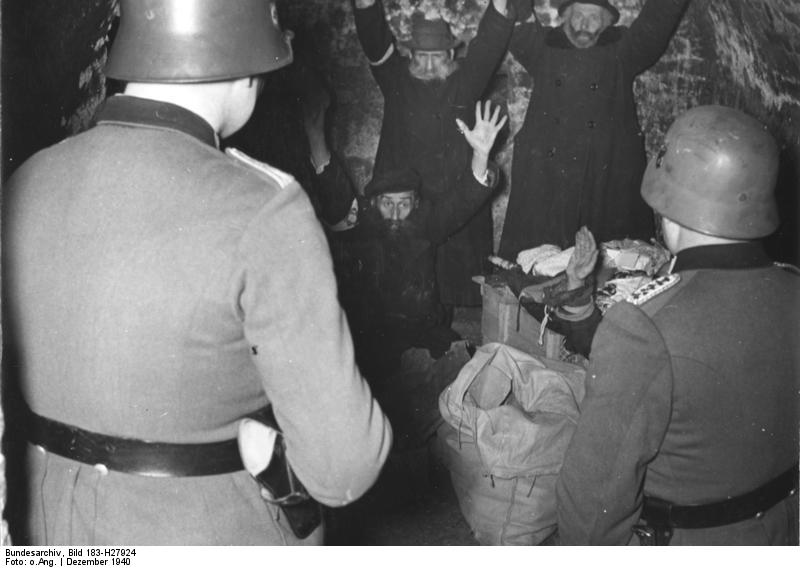
​Is it wrong to take the lives of a couple million innocent people to save several billion innocent lives?  Is it ever morally justified to take the life of one innocent person to save many lives? What about lying? Is it ever ok to lie in order to save lives? If you were hiding Jews in 1943 Nazi Germany, would it be moral to lie in order to save innocent lives? The question of morality isn't nearly as cut and dry as we often like to think. While most instances of right and wrong seem fairly apparent, there is a large field of gray that also seems to exist. 

One of the most famous conundrum scenarios in ethics is called the Trolley Car thought experiment. Individuals are told a hypothetical situation in which a trolley car is headed towards imminent doom, off a broken track or something like that. There is a very large man standing nearby. You know that if you push the man in the way of the trolley car, he will die, but the car will be held up enough to come to a stop and save the many lives in the car. What is the moral choice? Does saving the lives of many legitimize the immorality of taking one innocent life? What if the fat man weren't innocent. What if you had him in police custody after catching him in the middle of committing a murder. Would it be ok to push a guilty man in front of the car to save lives?There are all sorts of iterations to this problem, some of which you can find here. ​

Read More
0 Comments

Stalkers and Mistresses

5/1/2018

0 Comments

 
Picture
​The secular world often refers to Christianity as a religion, probably because it is. But many Christians don't seem to like being pigeonholed that way. Since Christianity is an exclusive religion, Christians feel the need to set themselves apart from "religion."  I often hear Christians respond to such phrasing with disdain. "Christianity isn't a religion," they say. "It's a relationship." The response is a well meaning quip intended to rebut the modern notion that religion is merely a personal, mental and emotional system intended to help one make their way through life. There are hundreds of religions to choose from, and Christianity is just another. But Christians feel that Christianity is so much more than that and they want the world to know it. As I think about the popular Christian response to Christianity as religion, I am finding that it becomes more unappealing to me. Much of my dislike for the response probably lies in the way some Christians make the remark. The response is often accompanied by a self-righteous tone, and is frequently directed towards "sinners" and unbelievers in what seems to be more of a smug retort by the Christian who is upset at being stereotyped. Rather than the response being a theological or apologetic rationale for why one should be a Christian, it's just a pointed response. When used with such a demeaning tone, I find the quip absolutely unappealing. Even when used appropriately, however, I'm finding that I just don't like the way Christians respond. It's not because saying that Christianity is a relationship is inaccurate, but rather that it's not precise. It conveys a true idea, but it often fails to take the unbeliever or the Christian to the proper conclusion, and may actually do more harm than good. ​

Read More
0 Comments

Arguments for Christian Pacifism

4/4/2018

0 Comments

 
Picture
For a much expanded version of the case for nonviolence in podcast form, check out the Fourth Way Podcast.

​1. Introduction: My journey to pacifism
2. Biblical Teaching: A foundation for pacifism using scripture
3. Biblical Examples: Examples of explicit non-violence in the face of aggression from the Bible and Apostles
4. Early Church Teaching: Quotes from the early church fathers about their beliefs on war, soldiering, vengeance, violence, punishment, etc
5. Real Life Examples: Examples of non-violence, its implementation, and effect
6. Pacifism Applied: Explores what the process and action of pacifism look like
7. Evaluating the Christian Alternative to Pacifism: A look at a Just War theory of morally using violence as a Christian and asking how it isn't even more idealistic than pacifism
8. Pacifism Quotes to Ponder: A reflection on non-violence and violence from those who journeyed through persecution 
9. Counter-Rebuttals: Rebutting the greatest criticisms leveled at a pacifistic position
10. Questions for Just-War Adherents : Returning difficult questions to Just War adherents about their ideology
11. Conclusion
12. Resources


*13. Addendums - Additional arguments and ideas I'm putting here until I reformat the site or figure out where I can include them. 
​*14. My Poetry - Poetry I've written in trying to work through various issues of the Kingdom, including nonviolence.
​*15. My Book - While the book isn't specifically about pacifism, it deals with the consequentialist (ends justify the means) morality which my culture taught me that prevented me from living as Christ desires, which includes a nonviolent life. I think this inculcated morality is what must be addressed before many can hear Christ's words. I'm happy to share this document for free as well, just contact me. 

The full, original article (not updated with more recent editions) can be downloaded in PDF format below: 
arguments_for_christian_pacifism.pdf
File Size: 1834 kb
File Type: pdf
Download File

arguments_for_christian_pacifism.docx
File Size: 363 kb
File Type: docx
Download File

0 Comments

The Means to the End

8/15/2017

0 Comments

 
Picture
I believe that thought experiments and hypothetical situations are fantastic ways to soften our hearts and show us glaring holes in our belief systems. This is what Samuel essentially did to David when he confronted him about Bathsheba in what is perhaps one of the most powerful displays of such a method used in the Bible. So, I'd like to begin by presenting you with a hypothetical situation that rocked my world for many years.

​Imagine, as in the M.A.S.H. clip below, that you are on a bus full of people trying to escape imminent death from persecutors. Your bus pulls off to the side of the road and into some thicket to avoid an incoming enemy patrol. As the patrol nears, your young child begins to scream. What do you do? Do you allow your child to scream so that the fifty lives on the bus are all lost, or do you smother your child so that only one life is lost? Fifty or one? What's the right answer?

Read More
0 Comments

A Call to Christian Ineffectiveness

2/9/2017

0 Comments

 
Picture
I have always had a strong moral compass, though I can't say it has always pointed North for the right reasons. I must admit that many of the times I have chosen to do good,  I simply did so in order to avoid disappointing others and the consequences of punishment that would follow. Intermingled with my moral tendency to favor approval was another ethic that surrounded me - the Puritan Work Ethic. Growing up in farmland Pennsylvania, I was surrounded by industrious, hard working people who worked often, worked hard, and worked well. This work ethic was directly tied to my moral ethic, for God instituted work before the fall (it was not a curse), and whatever we did was to be done to the glory of God. Now I'm not saying that I necessarily adopted such a work ethic in practice, but its ideology has definitely been a big part of my life.

Read More
0 Comments

OT Barbarism: Rebellion Against Justice

7/11/2016

0 Comments

 
Picture
​My last post discussed morality as viewed through our current societal lens. I talked about how we have all been tainted by notions of consequentialism – we often view the exact same action in a different moral light based on the outcome of the action.  I believe that it is this consequentialist mindset which prevents modern readers from grasping the goodness of the extreme judgment we find in the Old Testament.


Read More
0 Comments

Unintended Consequences: Rebellion against Morality

5/26/2016

0 Comments

 
Picture
​Sin is a difficult concept for humans. It is extremely difficult to humble oneself to the point of admitting sin's existence in the first place. Rationalization has been a millenia long past-time of both the armchair and academic sorts of philosophers and theologians. 

Only occasionally does one find an individual who can humble themselves to admit that they have failed morally. But even when someone can admit such a thing, it's almost always done with a false sort of humility. "Yes, I've failed morally. I mean, I'm sure I've told a lie before. But I've never killed anyone. I'm just as good as the next guy." Some are freely willing to admit moral failure, but minimize it as something that is an insignificant, relative, acceptable norm. These individuals didn't miss the mark, they just hit it imprecisely. 
​

In a world where most sins are relegated to the realm of minor inconvenience and displeasure, many are confused and abhorred by the Christian notion of judgment. "The wages of sin is death? Even for a little lie?" The Old Testament seems to be an antiquated, barbaric system of "morality" that could have only been dreamed up by a nomadic, ignorant, ancient people group. How else could one explain the pettiness of its judicial system? While some of the confusion levied against the Old Testament theocracy certainly resonates with me, there is a larger game afoot. Our "enlightened" culture has not suddenly come into some esoteric understanding of what true morality is - we're still rationalizing our actions just like all the cultures before us. We're simply rationalizing morality under the guise of scientism. ​

Read More
0 Comments

God and Evil

4/19/2016

1 Comment

 
Picture
One of the hardest ideas for me to work through in the Christian faith is the notion of evil. Don't get me wrong, I think Christianity handles evil far better than any other worldview. Atheism has to dismiss evil as non-existent or as a socially agreed upon, linguistic fiction. 
There isn't really any such thing as evil, just events, actions, and feelings that a majority of individuals and culturesdislike enough to cause them to band together and suppress others who perform such acts. Morality on atheism is just majoritized preferences or observed patterns for bettering survival chances and/or pleasure of the species. 
 
The Eastern religions and pantheism, on the other hand, tend to dismiss evil as a figment of our imaginations, or misguided ignorance - opposing our very strong intuitive notions of evil as malicious injustice that needs righted. Rather than making up a subjective fiction, like atheists, they acknowledge evil for what it logically is - nonexistent. In a world where everything is god, and everything is nature, what can possibly be "wrong?" Evil, then, is simply just a word used to describe a lack of understanding. Polytheists (if they exist anymore), like the ancient Greeks, end up clinging to a pantheon of gods that are just as tainted with evil as mortal man - leaving out any hope of resolution. Evil is just a natural truth that is a byproduct of an agent's choices and desires. And really, it's just a massive power struggle for the pantheon to fulfill their own desires, so evil ends up simply being fated inconvenience for those who are in the way of the more powerful. Evil is just the collateral damage of another's pursuit of fulfillment. We exist at the whims of gods, and maintain our existence by being of use to them or staying out of their way.

Read More
1 Comment
<<Previous
Forward>>
    *The views and ideas on this site are in no way affiliated with any organization, business, or individuals we are a part of or work with. They're also not theological certainties. They're simply thinking out loud, on issues and difficulties as I process things.

    Categories

    All
    Abortion
    Abortion Counterrebuttals
    Afterlife
    Apologetics
    Atheism
    Atonement
    Baptism
    Christian Life
    Church
    Cosmology
    COVID 19
    COVID-19
    Death
    Free Will
    Generosity And Wealth
    G.K. Chesterton
    Government
    Grace And Mercy
    Incarnation
    Inerrancy
    Joy
    Love
    Materialism
    Meaningpurpose
    Media
    Ministry-and-outreach
    Ministry-and-outreach
    Morality
    On-guard
    Pacifism
    Pacifism-counterrebuttals
    Podcast
    Poetry
    Politics
    Politics-of-jesus
    Pragmatism And Consequentialism
    Prayer
    Problem-of-evil
    Race-and-unity
    Rapid Fire
    Rebellion
    Reformed
    Relationships
    Salvation
    Social-issues
    Social-justice
    Sovereignty-of-god
    Spirit
    Spiritual-warfare
    Spontaneous-expansion-of-the-church
    Suffering
    Tradition
    Trinity
    When-helping-hurts


    Archives

    February 2024
    January 2024
    December 2023
    August 2023
    July 2023
    June 2023
    May 2023
    April 2023
    March 2023
    February 2023
    January 2023
    December 2022
    November 2022
    October 2022
    September 2022
    August 2022
    July 2022
    June 2022
    May 2022
    April 2022
    March 2022
    February 2022
    January 2022
    November 2021
    September 2021
    August 2021
    July 2021
    June 2021
    May 2021
    April 2021
    March 2021
    February 2021
    January 2021
    December 2020
    November 2020
    October 2020
    September 2020
    August 2020
    July 2020
    June 2020
    May 2020
    April 2020
    March 2020
    February 2020
    January 2020
    December 2019
    November 2019
    October 2019
    September 2019
    August 2019
    July 2019
    June 2019
    May 2019
    April 2019
    March 2019
    February 2019
    January 2019
    December 2018
    November 2018
    October 2018
    September 2018
    August 2018
    July 2018
    June 2018
    May 2018
    April 2018
    March 2018
    February 2018
    January 2018
    December 2017
    November 2017
    September 2017
    August 2017
    June 2017
    February 2017
    January 2017
    December 2016
    November 2016
    October 2016
    September 2016
    August 2016
    July 2016
    May 2016
    April 2016
    February 2016
    January 2016
    December 2015
    October 2015
    September 2015
    March 2015
    October 2014
    September 2014
    August 2014
    July 2014
    June 2014
    May 2014
    April 2014
    March 2014
    February 2013
    March 2009
    July 2007
    June 2007
    May 2007
    April 2007
    March 2007
    February 2007
    January 2007

    RESOURCES

    Check out some of our favorite online resources for theology and apologetics by clicking on the images below. 

    Picture
    Picture
    Picture

    RSS Feed

Proudly powered by Weebly